
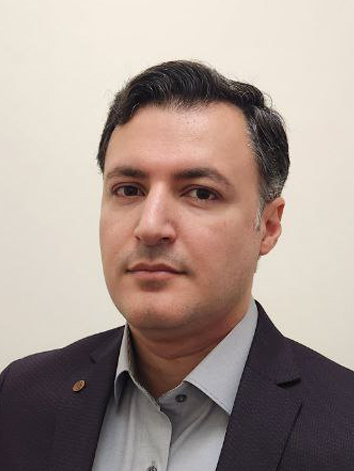
Department of Medical Physics (2018 - Present)
, ,
, ,
, ,
Dr. Mohammed N. Ashtiani holds a PhD from Sahand University of Technology, a Masters and Bachelors degree from Amirkabir University of Technology in the field of biomedical engineering, and is currently working as an assistant professor in Faculty of Medical Sciences, Tarbiat Modares University. His specialized research areas are neurorehabilitation, neuroimaging, movement disorders, and neurofeedback. His non-specialized interests include philosophy, Persian, and Italian literature.
Objective: Femur is the strongest, longest and heaviest bone in the human body. Due to the great importance of femur in human body, its injury may cause large numbers of disabilities and mortality. Considering various effective parameters such as mechanical properties, geometry, loading configuration, etc. can propel the study to the trustable results.. Methods: A 3D finite element model of the femur was subjected to different impact loading and orientations and also material properties. In addition to a reference healthy model of analysis, a total of 14 cases including four different loading conditions, six different bone density conditions and four different load orientations were considered. Results: Findings showed that the models with
Postural sway is a product of the neuromuscular system that is commonly used in contemporary labs and clinics for the assessment of postural stability. In this study, we analyzed the transient responses of the neuromuscular system during the rise-on-toes (ROT) movement in eighteen 11 yrs old girls. Their center of pressure (COP) trajectories were recorded with standard force-platform during the transition from quiet stance to standing on toes. To assess the robustness of children’s postural stability, we compared the ROT trajectories while the movement was performed with and without vision. Our results confirmed that the dynamic characteristics of the COP step response were significantly modified by visual feedback. In particular, the ROT
It has been hypothesized that the muscular efforts exerted during standing may be altered by changes in personal factors, such as the body stature and muscular strength. The goal of this work was to assess the contribution of leg muscles using a biomechanical model in different physical conditions and various initial postures. An optimized inverse dynamics model was employed to find the maximum muscular effort in 23,040 postures. The simulation results showed that mid-range knee flexion could help the healthy and strong individuals maintain balance, but those with weaker muscle strength required more knee flexion. Individuals of weak muscular constitution as well as those with tall stature are at the highest risk of imbalance/falling. The n
Aims To evaluate lower extremity muscle strength with a handheld dynamometer (HHD) in diabetic peripheral neuropathy (DPN) patients and to assess the possible association between muscle strength and falling that is a major public health problem.Methods In this cross-sectional study, 15 patients with DPN, evaluated based on the Michigan neuropathy screening instrument (MNSI), and 10 healthy control (HC) were enrolled. Fall efficacy scale-International (FES-I) was completed to assess fear of falling (FOF). Muscle strength of the peroneus longus (PL), TA, gastrosoleus (GS), Hamstring (Ham), VL, quadriceps femoris (QF), gluteus maximus (GM), and hip abductors (HA) of the dominant (right) lower extremity was measured by HHD.Results There was a m
The static initial postures of standing before applying perturbations may affect the maintenance of postural balance. The goal of this article was to find the stable set of postures and then determine the roles of joint mechanisms. The set of posture was defined in a biomechanical model based on three joint angles of the lower limbs. Optimized inverse dynamics method was used to solve for muscle forces in a precise model of the human musculoskeletal system posed in 4096 static sets of posture using AnyBody software. Results showed that the overall body muscular activity in standing is reduced by knee flexion. Moderate knee angles between 20? and 60? provided safer postures against possible perturbations because of higher collaboration level
Control of human upright posture and its stabili‑ty is a fundamental task of the neuro‑muscular sys‑tem. Daily and professional activities of individuals at home or work relies on postural stability (Mazaheri et al. 2013). Upright postural stability refers to the abil‑ity of control systems to properly react against per‑turbations (both internal and external) to maintain balance (Blaszczyk et al. 2014, Blaszczyk 2016). Phys‑ical perturbations like moving a standing support surface have been considered as routine methods to analyze postural control (Amori et al. 2015, Ashtiani and Azghani 2017a, Blaszczyk et al. 1993, Welch and Ting 2008).Standing on an unstable platform continuously perturbs the body by changing the rotational p
Balance control requires sensory information to properly adjust the posture against the applied perturbation in which the early responses may not use the sensory feedback. Stabilogram-diffusion analysis (SDA) was developed to distinguish the open-and closed-loop modes of postural control based on routine standing indices. This study was aimed at evaluating the roles of visual and cognitive interference on regulations of the joint strategies. Sixteen healthy young males were stood on a rotating support with open and closed eyes and with and without cognitive interference (total four sensory conditions). Motion analysis was employed to obtain kinematic changes in the body. In addition to calculating some classical metrics (path length, range
Introduction: Employment of braces can increase the standing stability by external support of the joints. Examining the effects of different braces, specifically in numerous static postures is practically difficult; therefore, the current parametric study aimed at modeling the alterations of the muscular recruitment patterns during static postures caused by wearing different braces. Materials and Methods: A biomechanical model of the musculoskeletal system was employed to simulate over 27,000 standing postures with different joint angles and brace conditions. Activation of the muscles in standing posture was calculated using optimized inverse dynamics. The postures with muscle efforts beyond the physiological limit were considered as the fe
Australasian Physical & Engineering Sciences in Medicine and ACPSEM are deeply indebted to the reviewers who generously donate their time and expertise to evaluate and improve manuscripts. APESM has a website at Publons where reviewers may lodge their review thank-yous for “credit”: https://publo ns. com/journ al/9661/austr alas i an-physi cal-and-engin eerin g-scien ces-in-. The names of those 274 reviewers from 40 countries who reported on the manuscripts published in, or considered for Volume 41 are given below:
Postural balance requires using joint strategies which may be changed from normal conditions by interfering with the sensory information. The goal of the present study was to quantitatively evaluate the role of the joint mechanisms during perturbed stance. Visual and cognitive interference was imposed to sixteen healthy young males under rotational toes-down or up perturbations. Power spectral analysis was employed to distinguish the joint contribution and their in- or out-phase co-works. Results showed that addition of cognitive loads reduce the stability by increasing the center of mass (CoM) power to three times greater. Besides the CoM, the knee and hip powers were also significantly enhanced by the cognitive loads (p <
Background: Reduced muscle strength due to aging may adversely affect the ability of the body in postural balance.Objectives: The aim of the present study was to numerically investigate the effects of aging on muscle recruitment patterns in keeping the balance during static standing posture.Methods: In this numerical study, a total of 4096 static postures were considered by changing in the angles of three lower limb joints ie ankle, knee and hip in two complete human musculoskeletal models of young and old body with 44 muscles in the leg. Inverse dynamics approach was used to find the muscle activation in all postures. The joint mechanisms were assessed by considering the ratio between related muscle activities to the total activation.Resul
Activation of the muscles and reaction forces of the joints rely on the body posture. The aim of the present paper is to investigate the relationship between the kinematics of static postures and muscle activation and joint forces by means of predictive regression models. To cover a reasonable number of postures and muscle recruitment patterns in forward inclinations, 4096 postures were analyzed. The response surface method was used to estimate the results of optimization-based inverse dynamics analysis. Two sorts of input variables (three angular positions of the lower limb joints and optimized muscular activation levels) and two model responses (muscle activation and joint force) were designed. The predictive models showed adequate goodne
Postural control is a multi‑sensory task that simultaneously involves central nervous system (CNS), musculoskeletal system and sensory organs (Peterka 2003). A routine decision of the CNS in response to a perturbation is changing the body position by postural adjustment to confine center of mass (CoM) movements within the base of support (Federolf et al. 2013, Oba et al. 2015, Runge et al. 1999). Evaluation of the CoM excursion gained several attentions as a proper index for the whole body efforts due to its simple and reliable measurement (Abe et al. 2010). Several researchers have considered linear dynamics in analyzing the CoM excursion (Dingenen et al. 2013, Federolf et al. 2013). Although these techniques have appropriately indicated
Background: Consumption of hot substances may harm the surrounding bone around a dental implant. High temperatures at the bone-implant interface (BII) interferes with local cellular activities involved in the osteointegration.Objectives: The present study was aimed at calculating the temperature distribution through the BII and the jaw bone under application of a transient cyclic thermal load.Methods: In this numerical simulation, finite element method was employed in a commercialized dental implant model drawn by computer-aided design tools based on CT data to find the temperature in superficial and deep bone regions near the BII. The heat load was applied cyclically during the intake time.Results: Results showed that the highest temperatu
no record found